Scarce, expensive construction machinery: GPS to make every excavator hour pay
Delivery times of 6 to 8 months and rising prices: in Morocco, every construction machine counts. How GPS tracking helps you use it better and protect it.
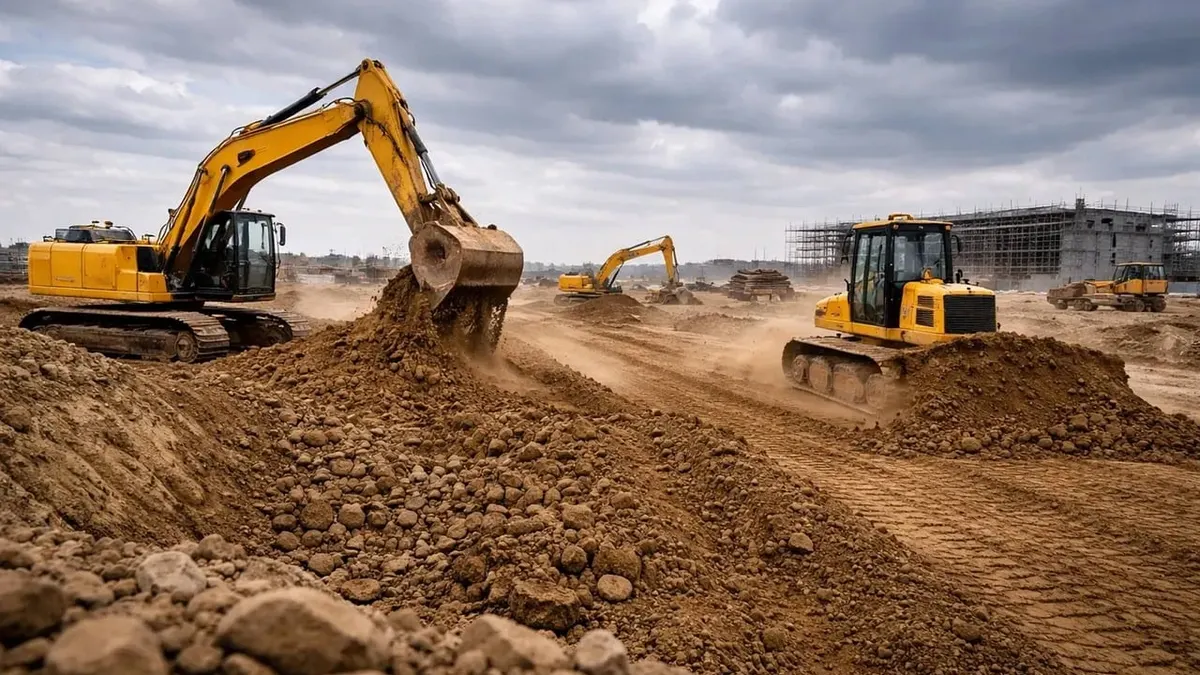
Stadiums, motorways, ports, housing: building sites are multiplying across Morocco, and the machinery fleet cannot always keep up. For a construction company, an excavator sitting idle in a car park or vanishing overnight is very costly. When its replacement only arrives in several months, each machine becomes an asset to watch closely.
A market under strain
Several Moroccan media outlets describe the same situation. In an article published on 5 October 2025, La Vie éco reports that “delivery times vary between 6 and 8 months, against 1 or 2 months before”. According to AIM BTP, the importers’ association cited in the same article, purchase prices for machinery have risen by 30 to 35% since the pandemic. Cranes, bulldozers and excavators are the most affected.
On 17 June 2025, Bladi relayed accounts from professionals who consider machinery capacity “close to saturation” ahead of the 2030 World Cup. These figures are more than a year old and partly rely on anonymous sources, but the trend they describe still holds for anyone who has to buy or rent equipment today.
The practical consequence: you can no longer replace a machine overnight. So you need to use it to the full and protect it.
Three problems GPS tracking helps solve
1. Lost hours. An idling machine burns fuel and wears out without producing anything. With a tracker, you see live which machines are working, which are stopped and for how long.
2. Unauthorised movements. Machines are often left on open sites, at night and at weekends. A virtual zone around the site triggers an alert if the machine leaves it. You react straight away, without waiting for Monday morning. Tracking does not prevent a theft, but it gives you the position and the time to alert the authorities.
3. Maintenance follow-up. A reliable usage history lets you plan servicing according to real use rather than guesswork, and avoid a breakdown during a critical phase.
A concrete example
Imagine an earthmoving company in Tangier with four excavators and two loaders, spread over three sites. The operator of one excavator leaves the site on a Saturday evening without telling anyone: the virtual zone sends an alert to the manager. On Monday, looking through the history, the same manager notices that a loader sat idle with its engine running for nearly four hours a day. An instruction to switch off at idle is enough to cut consumption. This example is fictional; it illustrates what the data lets you see.
What tracking provides, point by point
| Need | Useful feature |
|---|---|
| Know where the machines are | Live position on the map |
| Prevent machines leaving the site | Virtual zones and alerts |
| Cut unnecessary idling | Engine-on idle reports |
| Plan maintenance | Usage history |
| Limit fuel theft | Tank level probe |
| Immobilise remotely | Remote engine cut-off |
How to go about it
- Equip the most expensive and hardest-to-replace machines first.
- Define one zone per site and update it each time you move.
- Set alert time windows: night, weekends, public holidays.
- Inform your operators. Tracking people is regulated by Law 09-08 and the CNDP (Morocco’s data protection authority), so check with the authority before rolling it out.
- Review the reports every week with the site managers.
And what about the trucks that supply the site?
Tipper trucks and concrete mixers are the link that holds everything up when they run late. The same tracking shows where they are and makes coordination with the site easier. To manage a mixed fleet, the HTC platform brings machinery and vehicles together on one screen.
Going further
Find out how we support construction and public works professionals, the fuel security module for tracking diesel levels, or our professional pack for a fleet of several machines.
Want to equip your machines before the next phase of work? Talk to our team in Tangier or anywhere in Morocco.