Dashcams for lorries and coaches: how many cameras, and where to fit them
Onboard cameras for lorries and coaches: where to fit 2 to 4 cameras depending on the vehicle, how long to keep footage and which CNDP data rules apply.
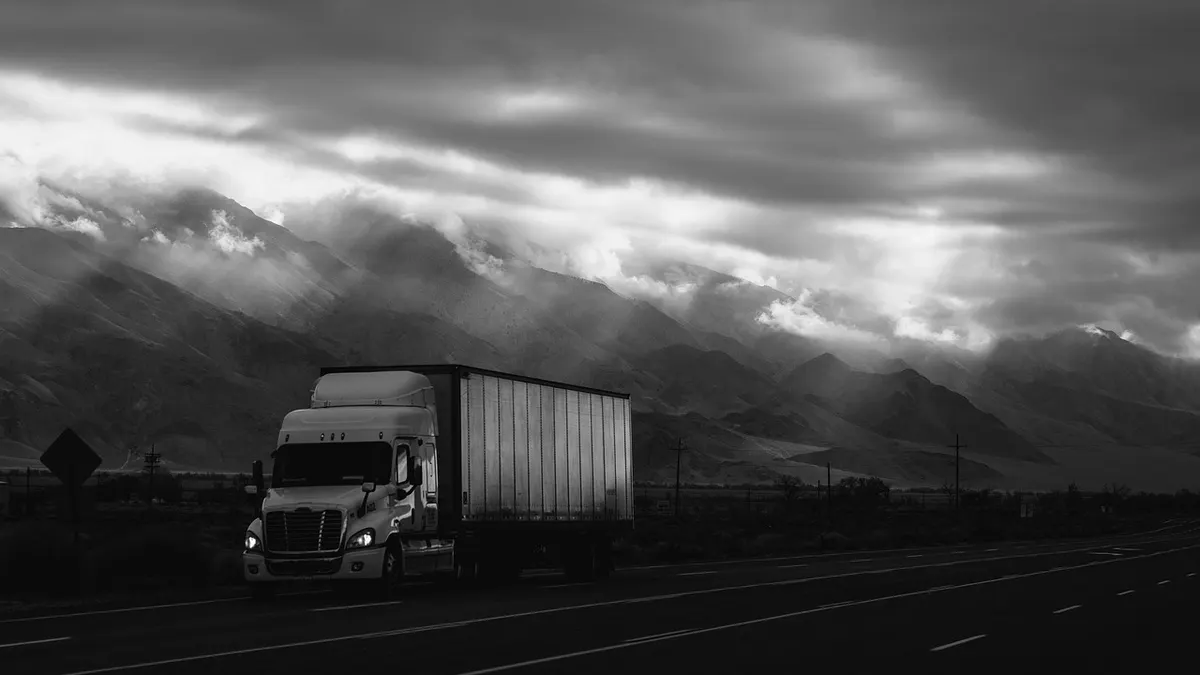
The number of cameras on a lorry or coach depends on the vehicle’s blind spots and the disputes you want to be able to settle. A delivery rigid usually needs two cameras; an articulated lorry or a passenger coach needs three or four. Before you film drivers or passengers, Law 09-08 and the CNDP, Morocco’s data protection authority, set the framework.
Key points
- Start from the incidents you actually have (scrapes when manoeuvring, disputed accident reports, incidents on board) to decide how many cameras you need.
- Two cameras are enough for a van or a rigid lorry; three or four suit an articulated lorry, a coach or a school bus.
- Footage is recorded on board; the useful clips can be viewed remotely when the network allows.
- A camera pointed at the cab or at passengers films people: inform them and declare the system to the CNDP.
Start from incidents, not from a number of cameras
The right number of cameras is the one that covers your real incidents. Go through your claims and complaints from the last two years and sort them:
- a front-end collision or a disagreement over an accident report;
- a scrape while reversing, at a loading bay or in town;
- rubbing on the nearside, where the driver sees least;
- an incident inside the vehicle (an argument, an assault, a passenger taken ill);
- cargo theft while the vehicle is parked.
Each type calls for a specific camera.
Which camera for which vehicle
| Vehicle | Useful cameras | What they cover |
|---|---|---|
| Delivery van | Road + rear | Accident reports in town, delivery manoeuvres |
| Rigid lorry | Road + cab | Accident reports, driver behaviour |
| Articulated lorry | Road + cab + nearside + rear | Accident reports, blind spot on the nearside, docking |
| Passenger coach | Road + cab + passenger saloon + door | Accident reports, incidents on board, boarding and alighting |
| School bus | Road + passenger saloon + door | Pupils boarding and alighting, behaviour on board |
The road camera remains the basis: it shows what happened in front of the vehicle at the moment of impact. The cab camera is more debatable, because it films an employee throughout their working day (see below).
Record on board, view remotely
Footage is recorded on board, on a memory card or a recorder, in a loop: the oldest files are overwritten as you go. On most systems, a detected impact protects the clip concerned, which you can then view remotely over the mobile network.
Keep three points in mind for your specification:
- who can see the footage: one or two named people, not the whole team;
- how a clip is retrieved: from the app, or by removing the card after an accident;
- what happens without network: on a mountain road, recording carries on on board and the upload waits until the signal returns.
How long to keep footage
The retention period must be short and justified by the purpose. In Morocco, the CNDP announced in a press release dated 21 March 2025 hearings to prepare a decision on the safeguards required for video surveillance, under Law 09-08. Before installing cameras, check the CNDP website for the texts in force and the procedure that applies to your case.
For comparison only, the French authority, the CNIL, states for video surveillance at work that in principle the retention period should not exceed one month, and that a few days are often enough. That rule is French and does not apply in Morocco, but it gives an idea of scale. A clip linked to an accident is kept for as long as the dispute lasts.
Filming drivers and passengers: inform and declare
A camera pointed at the cab films an employee. Inform each driver in writing, explain the purpose (claims, safety), say who sees the footage, and declare the system to the CNDP (Law 09-08). In France, the CNIL considers it excessive for a camera to film an employee continuously at their post: keep the cab camera for cases where it really helps, or limit it to event clips.
For a coach or a school bus, also warn passengers, for example with a visible pictogram at the door. For pupils, inform parents and the school. This text is not legal advice: refer to the law itself and to the CNDP. Our article on employee geolocation and the CNDP sets out the procedure.
Example: three coaches between Agadir and Marrakech
Imagine, as a fictional example, a coach operator in Agadir running three coaches on the Marrakech route. In one year he has had two disputed accident reports and an argument between passengers. He fits each coach with a road camera, a saloon camera and a door camera, with no permanent cab camera. He puts up a pictogram at the door, informs his drivers in writing and files his declaration with the CNDP. After a scrape at a roundabout, the recorded clip lets him show the insurer what happened.
How GPS tracking complements video
Video shows the scene; GPS tracking places it within the journey: exact time, position, speed before the impact, driving time. Our onboard video offer combines Full HD cameras, night vision and impact detection, with clips you can view from the app. For school buses, see also our school transport page, and for use after an accident, the article on professional dashcams and claims.
To work out the right number of cameras for your vehicles, describe your fleet to HTC Solutions.