Motorbikes and scooters in Morocco: tighter controls, and what they mean for you and your riders
Conformity checks at Tanger Med, regulated sellers, ticketing cameras: what NARSA is preparing for two-wheelers, and how GPS helps.
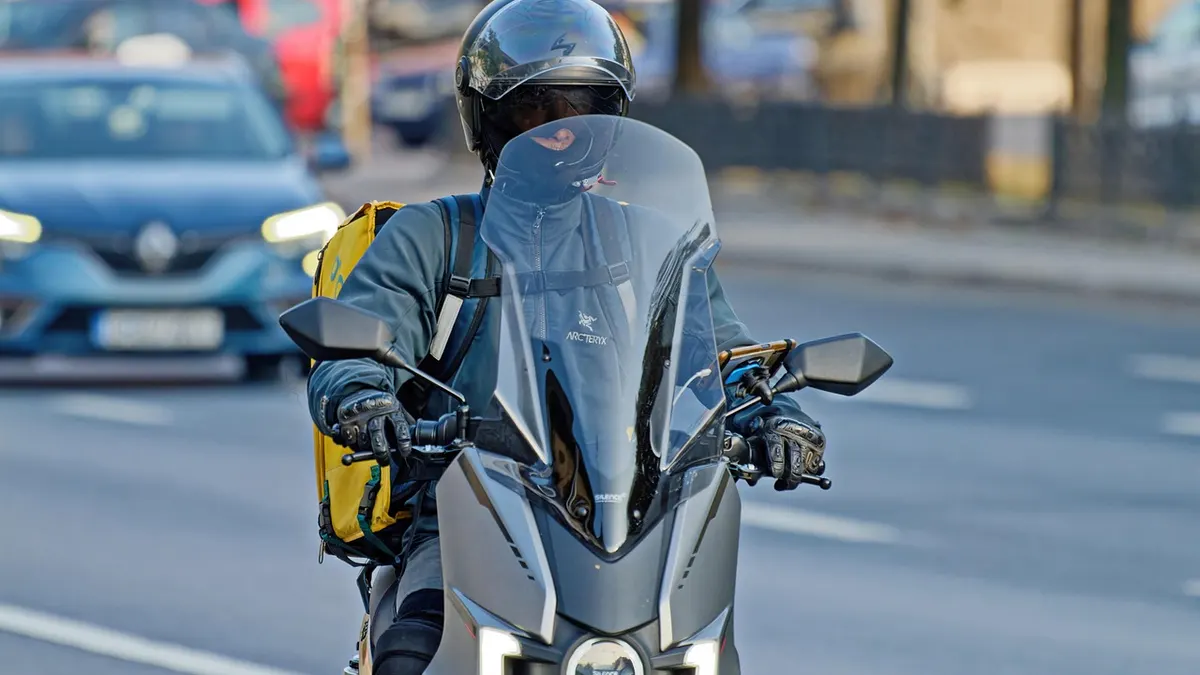
Do you own a scooter or a motorbike, or run couriers for a delivery company? Since January 2026, two-wheelers have been at the centre of the authorities’ attention. Border checks, regulated sellers, cameras: the list of measures keeps growing. Here is what has been announced, what remains unclear, and what GPS tracking can bring you in this context.
What was announced in 2026
A conformity check in the ports. According to Hespress (16 January 2026), the Minister of Transport Abdessamad Kayouh announced two conformity certification offices, at Tanger Med and Casablanca, to be extended gradually to the other ports. They depend on NARSA (Morocco’s national road safety agency) and work with customs. The ministry is also preparing a set of specifications to approve motorbike sellers.
A road strategy worth 8.7 billion dirhams. According to Le360 (23 February 2026), the 2026-2030 strategy provides for a budget of 8.7 billion dirhams. The director general of NARSA states in it: “In the near future, we will ban the import of two-wheelers with modifiable engines.” Cameras “making it possible to report and fine serious offences” are also planned, in particular for small-capacity bikes on motorways.
A precedent to keep in mind. In August 2025, a campaign to check motorbike speeds was suspended a few days after its launch. Le360 (21 August 2025) reports a twelve-month transition period and lawyers pointing out that the procedure rested on a simple internal NARSA circular.
Application dates therefore remain to be confirmed with NARSA or the Official Bulletin. This article does not replace legal advice.
Why it concerns professionals too
A delivery company that fields twenty scooters is directly exposed to three issues: the origin and conformity of the machines it buys, the real speed of its couriers, and proof of what happened in case of a check or an accident.
Take a fictional case: a small meal-delivery business in Tangier, with fifteen scooters. One morning, a courier is stopped at a check. The manager must know where the vehicle was, at what time, and whether the machine really belongs to the declared fleet. Without data, they reconstruct it from memory. With a trip history, they look at the whole day in two minutes.
What GPS tracking brings in practice
| Need | Useful GPS function |
|---|---|
| Know where the scooters are | Live tracking on a map |
| Limit speeding | Configurable speed alerts |
| Prevent use outside working hours | Zones and time slots |
| Prove a trip | Movement history |
| React to a theft | Movement alert and live position |
On a fleet of two-wheelers, the speed alert has particular value. A manager who sees the speeding can adjust rounds and the delivery times promised to customers before an incident happens.
For a private owner, the reasoning is simpler. A discreet tracker gives the scooter’s position in case of theft and alerts you at the first unauthorised movement. You can alert the police with a precise position, with no guarantee that the vehicle will be found.
What to do now
- Check your machine’s conformity: conformity certificate issued by the seller, approved engine size and speed.
- Keep your papers up to date: registration document, insurance, rider’s identity for each scooter in the fleet.
- Follow NARSA news: the final texts may differ from the announcements.
- Equip the machines that work: a compact tracker hides under the seat or inside the fairing.
- Inform your couriers: geolocating an employee requires clear information and compliance with the rules of the CNDP (Morocco’s personal data protection authority).
A word on courier safety
The helmet and caution remain the courier’s responsibility. GPS tracking gives the fleet manager an overall view to build rounds with realistic deadlines. A courier who is less rushed rides more calmly.
At HTC Solutions, the Tangier branch fits trackers on motorbikes and scooters, with a technician able to attend anywhere in Morocco.
To equip a fleet of scooters or protect your motorbike, see the Motorbikes and two-wheelers solution, the standard pack or contact us.