One year of 5G in Morocco: are your 2G GPS trackers at risk?
5G is a year old in Morocco and 2G is already being switched off in France. What this means for your fleet’s GPS units, in Morocco and on the road to Europe.
On 7 November 2025, Maroc Telecom, Orange Maroc and inwi launched commercial 5G, first in Casablanca, Rabat, Tangier, Marrakech, Agadir and Fès (Hespress, 7 November 2025). A year later, many fleet managers are asking the same question: will the old 2G and 3G networks disappear, and with them the GPS units that use them?
The short answer: not straight away in Morocco, but you need to prepare. And for vehicles driving in Europe, the deadline is already here.
Where 5G stands in Morocco
According to figures from the ANRT (Morocco’s telecoms regulator) reported by Finances News Hebdo (18 July 2026), the country had 3.22 million 5G users and 8,400 base stations at the end of March 2026. Coverage reached 44% of the population. The operators have committed to reaching 45% at the end of 2026, then 85% in 2030.
5G is therefore advancing quickly in the cities. For a GPS unit, though, it changes almost nothing. A tracker sends small amounts of data: a position, a speed, an ignition status. It does not need very high speeds. What matters to it is that the network it uses stays switched on everywhere the vehicle goes.
No date yet for the end of 2G and 3G
In Morocco, the ANRT has published no official switch-off timetable. LeBrief (15 November 2025) considers that a shutdown would be “likely by 2030”, in line with the Digital Morocco 2030 strategy. That is the newsroom’s estimate, not an announcement.
The same article explains why the question arises. With 5G, operators have an interest in reusing the frequencies and masts of the old networks for 4G and 5G. That is what happened elsewhere.
In France, 2G is being switched off right now
The nearest example is France. On its dedicated page, updated on 10 September 2026, Arcep (the French telecoms regulator) sets out the timetable. In mainland France, the first 2G cut-offs took place on 31 March 2026. Depending on the operator, the roll-out runs from late September to mid-December 2026. 3G will follow, between 2028 and the end of 2029 depending on the operator.
Arcep names the equipment most affected: connected alarms, remote assistance devices, intercoms and some medical devices. Those that are not compatible with 4G, 5G or another technology “will have to be replaced because they will no longer be able to work”. The regulator advises running a check now with your supplier.
A GPS tracker is a connected object like any other. If it only speaks 2G, it will meet the same fate.
The real risk for a Moroccan fleet today
For a vehicle that stays in Morocco, nothing stops tomorrow. The risk lies elsewhere.
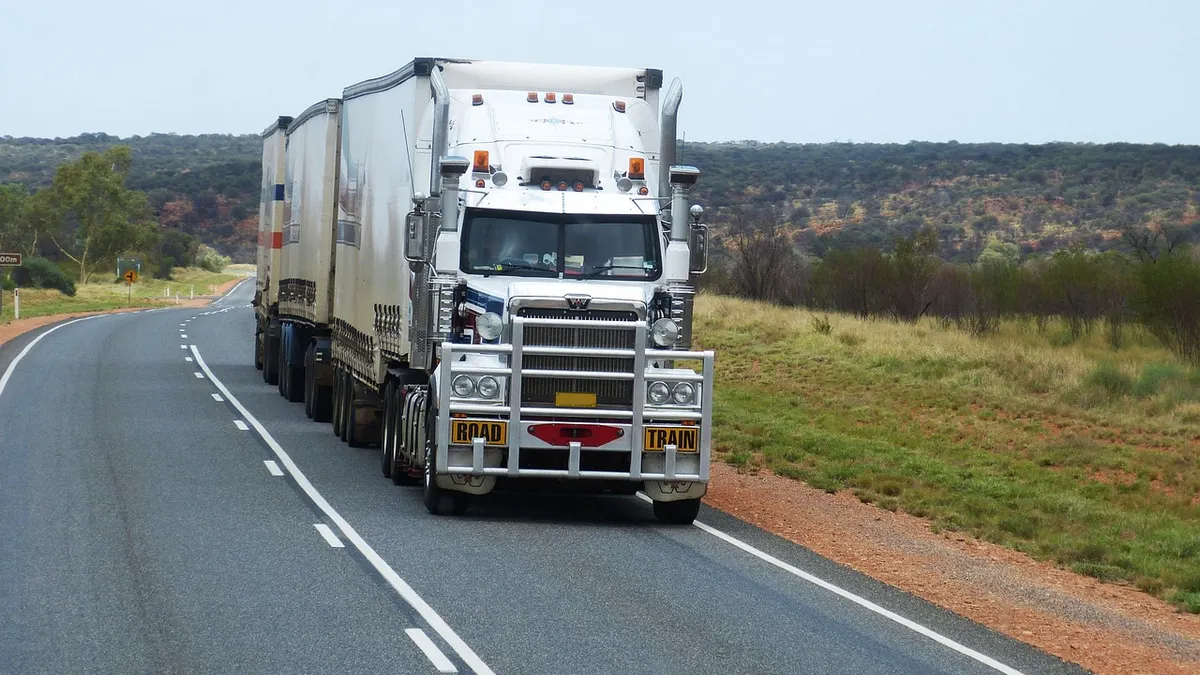
Trucks heading to Europe. A heavy vehicle leaving Tanger Med for France uses the French network on roaming. If its unit only works on 2G, it may stop reporting a position once 2G is cut along its route. The vehicle becomes invisible on the map just when it is furthest away. Hauliers concerned have an interest in checking their units now. The rules change from one country to another: check the timetable for each country you cross.
Purchases made today. A unit installed in 2026 has to last several years. Buying a 2G-only model is a bet that it will not need replacing before the end of its life. With a possible switch-off before 2030, that bet becomes risky.
Poorly covered areas. Depending on the place, one network can be weaker than another. A unit able to move from one network generation to another has a better chance of staying connected than a model limited to a single one.
What to check on your units
Three simple questions to put to your installer:
- Which network does my unit use? 2G only, 2G and 4G, or 4G with modes dedicated to connected objects. The model’s data sheet states it.
- Is my SIM card suitable? An old SIM or a badly chosen plan can limit the unit to a single network.
- Can the unit be updated remotely? Some multi-network models reconfigure without being removed.
Do this inventory vehicle by vehicle. Start with those that leave Morocco and those carrying the most important options, such as remote engine cut-off.
What GPS tracking must keep doing
The network is only a pipe. What matters to you is the result: seeing your vehicles live, receiving alerts, keeping the trip history and being able to cut an engine in the event of theft. If the unit loses the network, all of that stops at once.
For fleets that cross the Mediterranean, our transport and logistics page presents the equipment suited to heavy vehicles. The Professional pack groups the options for more demanding fleets.
Want to know whether your current units will hold up? Contact us.